Service Area
Service Area
Market Brief
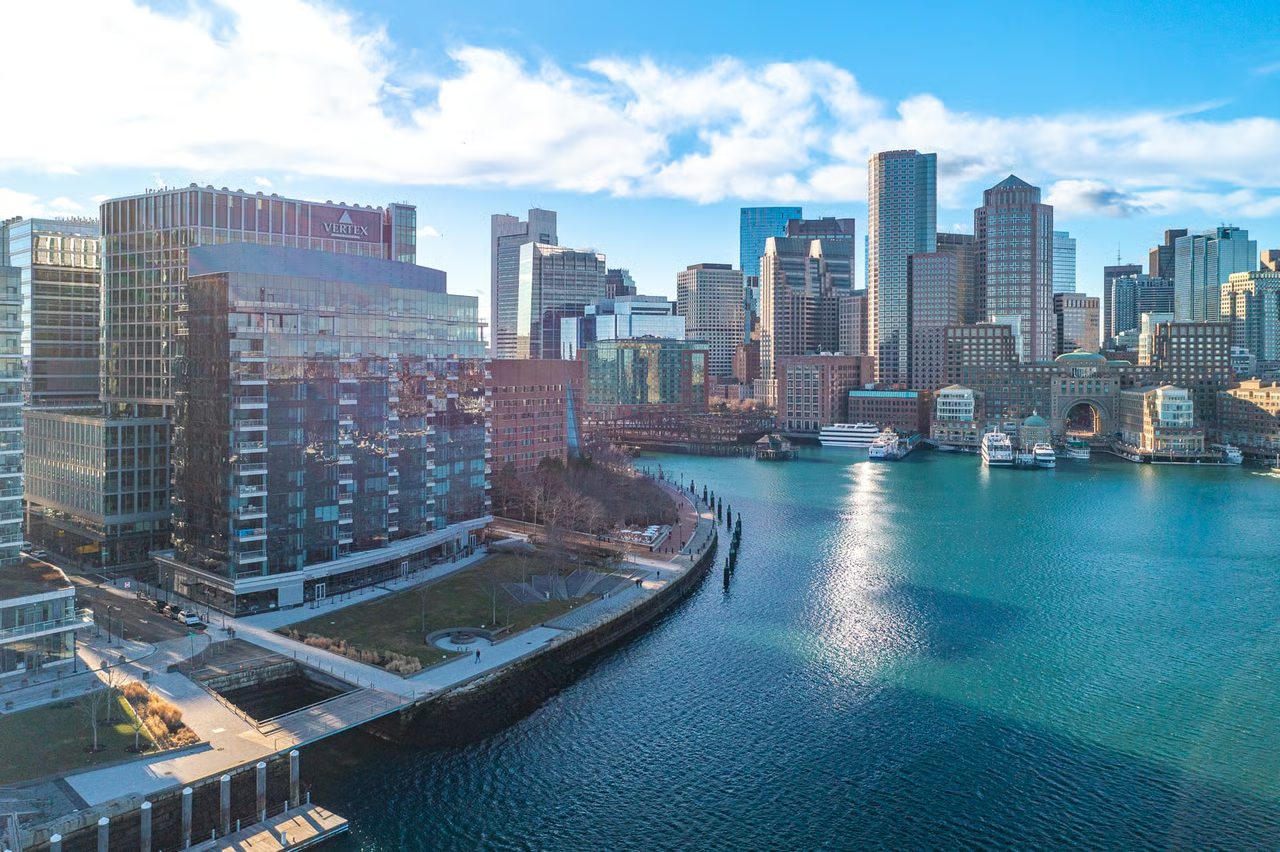
The Seaport District represents Boston's most dynamic modern development corridor, featuring cutting-edge office towers, luxury residential condominiums, and mixed-use projects that have transformed the waterfront. Tech companies, financial services firms, and life science tenants anchor the district's commercial real estate market, creating strong demand for Class A office and lab space. Seaport investors often pursue 1031 exchanges to transition from older industrial or commercial properties into stabilized office, logistics, or life science assets. The district's rapid appreciation and high property values make strategic exchange planning critical for preserving equity. Our team assists Seaport investors in identifying replacement properties nationwide, ensuring access to opportunities that match their investment criteria while meeting the strict identification deadlines. The Seaport's proximity to Boston, MA's financial core and Logan Airport enhances its appeal for institutional investors seeking prime commercial holdings.
Search our service areas
Based in Boston, MA. Nationwide identification support within 45-day and 180-day deadlines.
Local Market Notes
Seaport's lab market absorbed years of speculative construction, and the pullback in biotech leasing over the past couple of years has left some buildings with real sublease space on the market. That doesn't make lab a bad replacement thesis — it makes timing the trade matter more. An owner exiting a Seaport lab asset today is often selling into a market where buyers are underwriting vacancy risk more conservatively than they were a few years ago, which affects both pricing and how quickly a sale actually closes relative to the 45-day identification clock.
Buildings that pivot successfully often do so by offering shorter-term flex leases to bridge the gap rather than holding out for a single long-term biotech tenant, and that flexibility can change how a lender views the asset's stabilized income.
A meaningful share of the Seaport sits on filled land, and flood zone designation affects insurance costs and lending terms for both the property being sold and any replacement property under consideration. We flag flood zone status early in the identification process — not to rule properties out, but because it changes the insurance underwriting timeline enough that it needs to be accounted for inside the 180-day closing window rather than discovered late.
We also confirm whether any flood mitigation infrastructure built into a property qualifies for an insurance premium credit, since that detail is sometimes missed in a standard title search but can meaningfully affect operating costs on the replacement side.
Several buildings in the Seaport were converted from conventional office to lab use during the biotech buildout, and that conversion history matters when an owner is selling a building that was only partially converted or never fully leased up as lab space. We evaluate whether a property's disclosed use matches its actual improvements before it goes into an identification list, since a mismatch there can slow due diligence on the replacement side.
Buyers financing a partially converted building typically want documentation on which floors were actually built out to lab specifications versus simply marketed that way, so we confirm the disclosed condition matches reality before it goes on an identification list.
Seaport's density and limited street parking have made structured parking a legitimate standalone asset class in the district, and some owners exiting Seaport real estate use garage or parking-related assets elsewhere as part of a diversified replacement strategy — they're less tenant-dependent than office or lab space and can round out an identification list alongside a primary net-lease or multifamily pick.
These assets also tend to carry simpler lease structures than office or lab space, which can shorten the diligence period on the replacement side when timing is tight.
A number of Seaport parcels were developed on or near ground leases tied to the original Seaport Square and Fan Pier master plans, and an owner selling a leasehold interest — rather than fee simple — needs that structure confirmed early, since it affects both marketability and how the qualified intermediary documents the sale. We check ground lease status as a first step, not an afterthought, on any Seaport listing.
Even when a ground lease has decades remaining, lenders scrutinize the remaining term relative to any financing period, so confirming that math early avoids a late surprise during underwriting.
Compliance + Resources
We coordinate with Qualified Intermediaries, CPAs, and attorneys on every Boston exchange.
Massachusetts transfer taxes and municipal filings apply to most closings. Our team keeps your advisors aligned with timeline alerts and documentation packets.
Capabilities
Full-stack identification, diligence, and compliance coordination delivered from Boston command centers.
FAQ
Next Steps
Tell us about your exchange goals in Boston and we’ll share a personalized property identification plan within one business day.